
Lem the pigeon has never seen the ocean.
Place the blocks, press Play and watch Lem walk.
80+ puzzles. No ads. No timers. No flying.
Lem the pigeon has never seen the ocean.
Place the blocks, press Play and watch Lem walk.
80+ puzzles. No ads. No timers. No flying.

Nobody at the park has. There's only a postcard of it under the bench that says WISH YOU WERE HERE.
"When you don't know, act as though."Grandma's advice for this
So Lem picks a morning and starts walking. Flying would simplify things. Lem doesn't fly.
Lem walks straight ahead, turns around at walls and doesn't take directions. You place blocks on the board, press Play and watch what happens. Get Lem to the key, then to the lock.
If it goes wrong, your blocks return to where you placed them and you try something else. Nothing depends on timing or fast fingers, so take as long as you like.
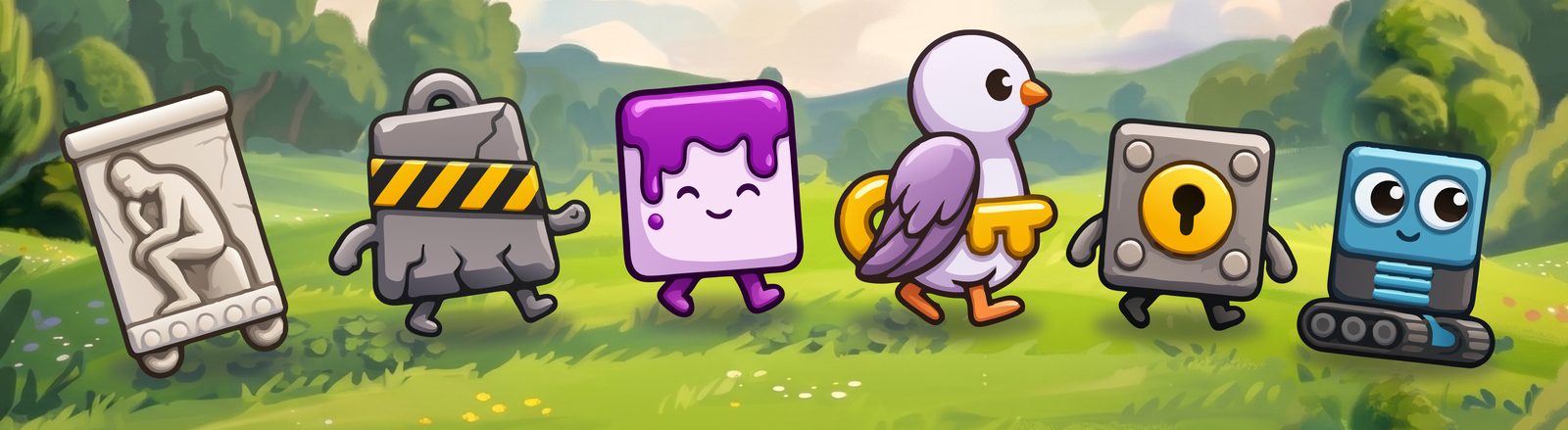
Work in pairs. Lem enters one and exits the other.
Hold up until Lem steps off. Then they're gone.
Give Lem a ride along their path. Next visit, they ride back.
End the run if Lem gets on top. The sides are just a wall.
Stay up until Lem steps on a button. Then every statue goes down.
Get pushed one square at a time and drop off edges.
Each new block comes with a short tip the first time you meet it. After that, the blocks start doing jobs they don't look built for. The later levels are properly hard, and the answer usually rests on an idea you didn't try first.
80+ levels across 8 worlds, each with its own world and atmosphere.








A Walk in the Park was hand-made with AI. It was built by an engineer, but none of the code was written by hand. The game is assembled from component parts, like generic block types that inherit special abilities. AI played a large part in the music too; the melody, orchestration, and lyrics are all original.